
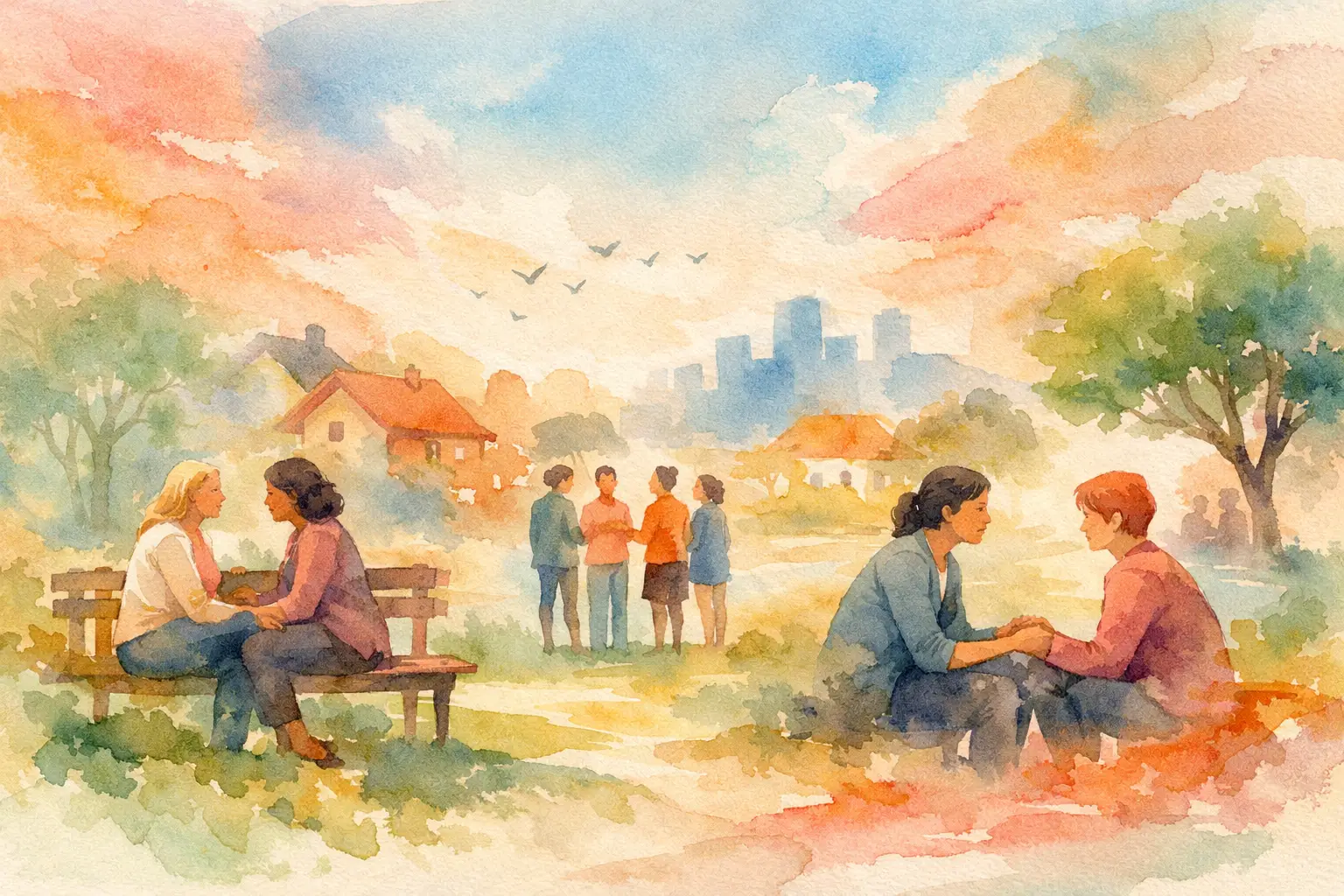
Some people do not avoid support because they do not care about their wellbeing. They avoid it because the process feels cold, expensive, confusing, or unsafe. That is where community based mental health services can change everything. When support is offered in a way that feels human, local, culturally aware, and grounded in real relationships, people are more likely to reach for help before they hit a breaking point.
That matters because emotional support works best when it does not begin with fear. If someone has to overcome shame, long wait times, financial pressure, or the feeling of being analyzed before they can even speak honestly, the system is already asking too much. Community-based support offers another path – one built around dignity, trust, and practical care that people can actually access.
What community based mental health services really mean
At their best, community based mental health services are not just therapy moved out of a clinic. They are a broader way of thinking about emotional wellbeing. They recognize that people heal in relationships, in safe environments, and in communities that know how to respond with care instead of judgment.
That can look different depending on the setting. For one person, it may mean low-cost one-to-one emotional support. For another, it may be a support group, a school-based wellbeing program, a trauma-informed workplace training, or guidance through a community organization they already trust. The point is not to force everyone into one model. The point is to meet people where they are.
This is especially important for people who have felt overlooked by traditional systems. Some have had experiences that felt impersonal or shaming. Some face cultural barriers or financial hardship. Some simply need support that fits real life, not a rigid process that assumes everyone has the same needs, language, schedule, or sense of safety.
Why community based mental health services matter now
There is a growing gap between how many people need support and how many feel able to access it. Cost is part of the problem, but it is not the only one. A lot of people are looking for support that feels less clinical and more relational. They want tools they can use in everyday life. They want to feel safer in their bodies, clearer in their emotions, and less alone in what they are carrying.
Community based mental health services matter because they make early support possible. They create space for people to be heard before stress becomes overwhelming, before relationships break down, and before people start believing they have to cope alone. Early intervention is not only more accessible. It is often more humane.
They also help shift the burden away from the idea that only specialists can support emotional wellbeing. Skilled practitioners absolutely matter, but communities matter too. When families, schools, workplaces, faith groups, and local leaders learn how to respond with calm, non-judgmental care, support becomes more available in the places where people actually live.
That does not mean every problem can or should be handled informally. Some situations require specialist care and clear boundaries. Community support is not a replacement for every form of help. But it can be a powerful first layer of safety, connection, and practical support that keeps people from falling through the cracks.
What good community-based support looks like
Not every service that uses the word community feels safe in practice. Good support is not just about location or price. It is about how people are treated.
The strongest community-based services are built around emotional safety. That means people are met without shame, rushed conclusions, or pressure to explain themselves in ways that do not feel natural. The environment is clear, respectful, and consistent. Support feels collaborative, not top-down.
It is also practical. People need more than kind words. They need tools that help them regulate, communicate, and make sense of what they are feeling in everyday moments. A service can be warm and still leave people unsupported if it does not offer anything they can carry into their home, relationships, work, or parenting.
Cultural adaptability matters too. Communities are not all the same, and care should not act as if they are. Good services pay attention to language, identity, lived experience, faith, family dynamics, and the realities people are navigating. Being accessible is not just about lowering the price. It is about removing the social and emotional barriers that make support feel out of reach.
Why human connection changes outcomes
People regulate through relationships. That is not a slogan. It is something many people feel instinctively, even if they do not use that language. A calm, attuned, non-judgmental presence can help someone feel steady enough to think clearly, speak honestly, and reconnect with their own capacity.
This is one reason community support can be so effective. It creates more opportunities for healthy relational experiences. Someone may begin with one trusted conversation and then build from there. A parent may learn safer ways to respond to a child’s distress. A teacher may learn how to reduce shame in the classroom. A workplace manager may learn how to handle emotional pressure without escalating harm. These shifts are not small. They change the emotional climate around people.
AINT Foundation CIC is built around that idea – that emotional support should feel safe, non-judgmental, and usable in real life, not locked inside professional spaces or reserved for those who can afford traditional routes to care.
The trade-offs and limits to understand
Community based mental health services are valuable, but honesty matters. They are not automatically effective just because they are more accessible. If a program is poorly trained, inconsistent, or unclear about boundaries, it can leave people feeling unseen or unsupported. A community setting does not remove the need for skill, structure, and trauma-informed practice.
There is also the question of pace. Some people want immediate depth, while others need time to build trust before they can engage fully. Community support often works well because it allows for that gradual process, but it may not suit every person or every moment in the same way. It depends on what safety looks like for the individual.
Another reality is funding. Many community services are trying to meet serious need with limited resources. That can affect availability, continuity, and reach. It is one reason sustainable models matter so much, especially those that reinvest into affordable support rather than treating accessibility as an afterthought.
Who benefits from this approach
The short answer is more people than most systems account for. Individuals dealing with long-term stress, emotional overwhelm, or isolation can benefit. Families who want support that does not feel blaming can benefit. Schools, grassroots organizations, and faith communities can benefit when they want practical ways to create safer emotional environments.
Frontline staff and helpers also benefit. Many people are already supporting others in informal ways, but they have never been given clear tools or language to do it well. When communities learn how to respond with regulation, care, and healthy boundaries, support becomes more sustainable for everyone involved.
This is especially meaningful for people who have been made to feel that help is not for them. Maybe they have been priced out. Maybe they have felt misunderstood. Maybe they need an approach that respects their culture, honors their dignity, and does not ask them to fit into a narrow idea of what healing should look like.
Building a better future through community based mental health services
If we want emotional support to reach people earlier, more fairly, and with less harm, we need to stop treating care as something that only happens after crisis or only belongs in formal settings. Community based mental health services offer a different direction. They bring support closer to everyday life. They help people build skills, not dependence. They make room for safety before shame has a chance to take over.
The real promise here is not just access, though access matters deeply. It is the possibility of creating communities where people know how to respond to distress with steadiness, respect, and care. That kind of support does not make life perfect. But it can make people feel less alone, more resourced, and more able to meet hard moments without fear.
A better system often starts smaller than people think. It starts with one safe conversation, one trained community, one environment that chooses humanity over hierarchy. From there, healing becomes more possible.