When someone is overwhelmed, shut down, or carrying stress that has nowhere safe to go, being told to “just get help” can feel painfully out of touch. For many people, community mental health solutions are not a nice extra. They are the difference between struggling alone and being met with safety, dignity, and real support.
That matters because emotional support often breaks down long before healing ever has a chance to begin. Cost gets in the way. Waiting lists get in the way. Fear gets in the way. So does the feeling that you will be judged, talked over, or reduced to a problem. If support only works for people who already feel confident, resourced, and comfortable asking for help, it is not truly accessible.
What community mental health solutions should actually do
The strongest community mental health solutions do more than increase access. They change the experience of support itself. People need spaces where they can feel safer in their body, clearer in their emotions, and less alone in what they are carrying. That means support has to be practical, relational, and human.
Community-based support works best when it helps people regulate before expecting them to explain everything perfectly. Many people do not need more pressure to perform wellness. They need steadiness. They need language that does not shame them. They need someone who can meet them without judgment, without shame, without fear.
This is where many systems get it wrong. They focus on getting people into services, but not always on whether those services feel emotionally safe once someone arrives. A support offer can be technically available and still feel unreachable. If the process feels cold, confusing, or exposing, people often step back before they ever receive meaningful care.
Why traditional routes are not enough
There is no single reason people avoid formal support. Sometimes it is financial. Sometimes it is cultural. Sometimes it is previous harm, mistrust, or the simple exhaustion of repeating painful experiences to people who do not feel attuned. For parents, carers, young people, frontline workers, and community members under constant pressure, finding help can feel like another burden to manage.
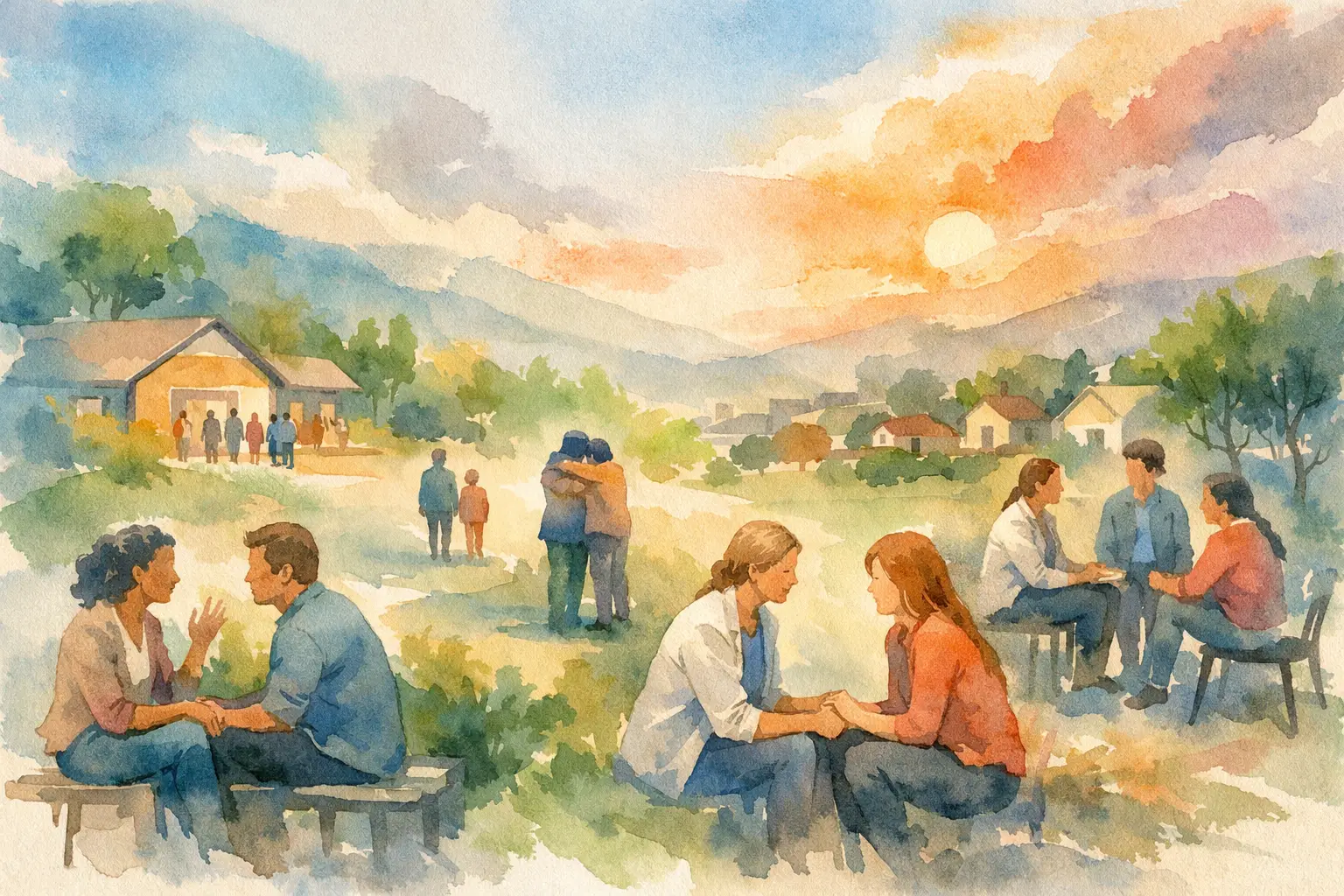
That is why community support matters so much. It can meet people earlier, with less formality and fewer barriers. It can exist in schools, community groups, faith spaces, workplaces, family settings, and online environments that feel more approachable. It can offer support before distress deepens into crisis.
Early support is not about minimizing what people are going through. It is about respecting the fact that small, timely interventions can prevent greater pain later. A grounded conversation, a regulating tool, a safe group space, or a trusted support pathway can change what happens next.
The best community mental health solutions are built around safety
Safety is often misunderstood as comfort alone. Real emotional safety is deeper than that. It includes being spoken to with respect. It includes not being rushed into disclosure. It includes having clear boundaries, predictable support, and language that does not strip people of dignity.
For trauma-informed work, this is essential. A person may want support and still find support hard to receive. They may appear distant, guarded, reactive, or uncertain. That does not mean they are unwilling. It often means their system is trying to protect them. Community support should know how to respond to that with patience rather than pressure.
This is one reason practical, non-judgmental models matter. People often need simple tools they can use in real life, not only insights they can name after the fact. Breathing space, emotional language, co-regulation, consistent relational behavior, and shame-free communication all help create conditions where support can actually land.
What effective support looks like in real communities
Good community support is not one-size-fits-all. A school may need staff training so students encounter more emotionally regulated adults throughout the day. A workplace may need healthier ways to respond to stress, conflict, and overload before people burn out. A family may need support that helps everyone communicate more safely, not just one person carrying the burden of change.
In grassroots and faith communities, the need is often for trusted, culturally adaptable support that does not ask people to leave their identity at the door. In low-income communities, affordability and flexibility are not side issues. They shape whether support is possible at all. Online access can also be a major part of the solution, especially for people in rural areas, people with mobility barriers, or those who feel safer beginning support from home.
The common thread is this: support needs to fit real life. If people have to become less stressed, more available, and more confident before they can access help, the model is upside down.
Community mental health solutions need more than referrals
A referral can be useful, but it is not the same as care. Communities need capacity, not just signposting. That means teaching people how to create safer emotional environments in the places where life is already happening.
This might include training school staff to recognize dysregulation without shaming students. It might mean helping managers respond to distress with steadiness instead of avoidance. It might mean equipping community leaders, parents, and support workers with tools for listening, grounding, and relational safety.
This shift matters because healing does not happen only in designated helping spaces. It happens in conversations, routines, relationships, and repeated experiences of being met well. When communities learn how to reduce shame and increase safety, emotional support becomes more scalable and more sustainable.
That does not mean everyone should take on the role of therapist. Boundaries still matter. Skill still matters. Some situations need deeper, structured support. But communities can absolutely become more emotionally safe, more responsive, and more capable of early intervention.
A more human model of care
At AINT Foundation CIC, this is the heart of the work. The focus is not on making support feel more clinical. It is on making it more human, more accessible, and more grounded in how people actually heal. The AINT Model centers neuro-regulation, shame-free communication, and relational safety so that support can be felt, not just delivered.
That approach is especially relevant for people who have felt missed by traditional services. Sometimes what changes everything is not a complicated process. It is being met by someone who does not judge your pace, does not force your story, and does not make you feel like you have to earn care.
There is also an important trade-off to acknowledge. Community-based models can be powerful, but they need integrity. Warmth without structure can become unclear. Access without training can become inconsistent. The goal is not informal support at any cost. The goal is safe, grounded, well-held support that respects both humanity and responsibility.
How to tell if a solution is right for your community
A useful question is not simply, “Is support available?” It is, “Will people here actually feel safe enough to use it?” That changes the standard.
Look for approaches that are affordable or low-cost, easy to understand, and flexible enough to meet different cultural and personal needs. Notice whether the language feels respectful. Notice whether the support offers practical tools, not just abstract advice. Notice whether people are treated as human beings with context, relationships, and nervous systems, not as tasks to process.
It also helps to ask who the support is designed for. If a service only works for people who are already confident in formal settings, there will always be people left outside of it. Effective community solutions are built with those people in mind from the start.
For leaders and organizations, the question becomes even more direct. Are you creating environments where people can settle enough to speak honestly? Are your teams equipped to respond without judgment? Are you investing only in crisis response, or also in prevention, education, and emotional safety?
Community mental health solutions are strongest when they restore something many people have been denied for far too long: the experience of being met with care that feels safe, respectful, and possible. When support is built around regulation, connection, and dignity, people do not have to fight their way into healing. They can begin where they are, with real human support around them.