
Resilience Building for Families Starts at Home
17 August 2026
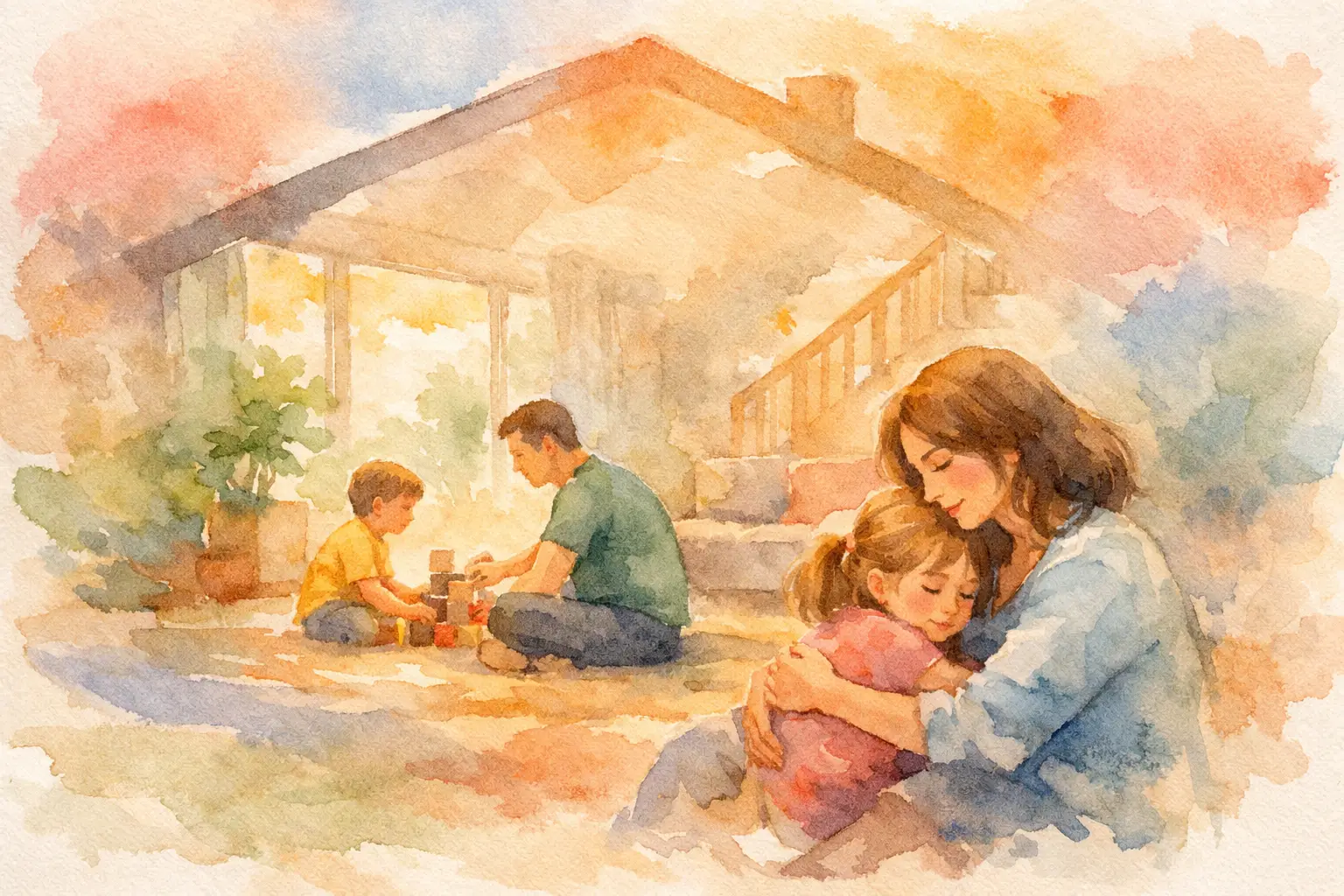
A hard morning can change the temperature of an entire household. Someone is late, someone is overwhelmed, someone goes quiet, and before long everyone is carrying more than the moment itself. Resilience building for families is not about making people tougher or expecting them to cope without support. It is about creating enough safety, connection, and practical understanding that a family can move through hard moments without losing one another.
Families do not need to be perfect to be resilient. They need places where feelings can be named without shame, repair can happen after conflict, and no one has to earn the right to be treated with care. That is a skill set, not a personality trait. And it can be built slowly, in ordinary moments.
What family resilience really looks like
Resilience is often misunderstood as bouncing back quickly. But a family may not bounce back quickly after pressure, loss, change, financial strain, conflict, or years of carrying too much. Sometimes resilience looks like pausing before an argument gets bigger. Sometimes it is a parent saying, “I was overwhelmed, and I am sorry I raised my voice.” Sometimes it is a young person learning that they can ask for space without being rejected.
A resilient family is not one that avoids difficult emotions. It is one where difficult emotions do not automatically become danger, blame, silence, or disconnection. People can have different needs, different communication styles, and different cultural expectations while still building a shared foundation of respect.
This matters because families are often where people first learn what support feels like. When home becomes a place where feelings are met with curiosity rather than criticism, people have more room to settle, think clearly, and reconnect. That does not erase external pressures. It gives everyone a steadier place from which to meet them.
Start with safety, not solutions
When someone is distressed, families often rush toward fixing the problem. That impulse comes from love. Yet advice can land badly when a person does not first feel heard. Before solutions, ask what would help them feel safer in the moment.
Safety can be surprisingly practical. It may mean lowering voices, stepping away from a heated conversation, sitting nearby without demanding words, or agreeing that nobody will be mocked for crying, anger, or needing time. It also means being clear that harmful behavior is not acceptable while still treating the person involved with dignity.
A useful question is: “Do you want me to listen, help you think it through, or just stay with you for a minute?” This gives the other person choice. Choice helps restore a sense of steadiness when life feels out of control.
For parents and caregivers, this includes offering yourself the same compassion. You cannot always respond calmly, especially when you are exhausted or under pressure. Resilience is not damaged by every imperfect response. What matters most is what happens next: the willingness to slow down, acknowledge impact, and repair.
Make room for feelings without making feelings the boss
A family can make space for emotion without allowing a difficult moment to run the whole day. The goal is not to suppress anger, fear, frustration, or sadness. The goal is to help each person express what is happening in ways that protect connection.
Try replacing labels with observations. Instead of “You are being difficult,” say, “I can see this feels like too much right now.” Instead of “Calm down,” try, “Let’s take a pause. We can come back to this when we both have more space.” These changes may seem small, but language shapes whether people feel attacked or supported.
Children and teenagers, especially, may not always have the words for what they are carrying. Their feelings may come out through withdrawal, irritability, tears, refusal, or sudden conflict. That does not mean adults must accept disrespect or abandon boundaries. It means boundaries work better when they are paired with curiosity: “This behavior needs to stop. I also want to understand what is going on for you.”
Adults need this approach too. A partner who becomes distant, a grandparent who seems short-tempered, or a caregiver who forgets things may be carrying stress that has not found a safe outlet. Curiosity does not excuse hurtful actions. It makes a more honest conversation possible.
Build small rhythms of connection
Family resilience is rarely built through one big conversation. It grows through repeated experiences of being noticed and included. The most useful routines are often simple enough to keep during demanding weeks.
A brief check-in after school, work, or dinner can create a reliable opening. Rather than asking only, “How was your day?” try asking, “What took the most energy today?” or “Was there a moment you felt good about?” These questions welcome both struggle and strength.
Shared routines can also help family members know what to expect. That might be a weekly meal, a walk, a game, music while cooking, or ten minutes without phones before bed. The activity matters less than the message behind it: you belong here, and there is time for you.
Be realistic. A family with shift work, caring responsibilities, limited space, or ongoing stress may not manage a picture-perfect routine. Connection can happen in five minutes in the car, a voice note, a cup of tea, or a kind text. Resilience should never become another standard families feel they are failing to meet.
Practice repair after conflict
Conflict is part of family life. The issue is not whether it happens, but whether people learn that connection can be repaired afterward. Without repair, small hurts can become stories people carry for years: “My feelings do not matter,” “I am always the problem,” or “It is not safe to speak.”
Repair begins with honesty. A helpful apology does not need to be long or dramatic. It can sound like: “I spoke harshly. That was not okay. You did not deserve that. Next time I will take a break before I respond.” This names the impact without placing responsibility on the other person to immediately forgive.
Families can also agree on what a pause looks like. For example, a person might say, “I need twenty minutes to settle, but I will come back and talk.” The return is essential. Walking away to regulate can protect a relationship; walking away without returning can feel like abandonment.
When conversations restart, focus on one issue at a time. Trying to solve every past hurt in a single discussion usually leaves everyone more overwhelmed. A slower approach can feel less satisfying at first, but it is often more sustainable.
Share the emotional work
Many families rely on one person to notice everyone’s needs, smooth over conflict, remember appointments, and keep the emotional atmosphere stable. That invisible work is heavy. Resilience grows when care is shared rather than quietly assigned to the most capable person.
This can mean asking children to take age-appropriate responsibility, inviting partners to check in with each other directly, or making a clear plan for stressful periods. It may also mean reaching beyond the immediate household. Trusted relatives, neighbors, faith communities, schools, and community groups can all be part of a family’s circle of support.
Asking for help is not proof that a family is broken. It is a wise response to the fact that people were never meant to carry everything alone. For some families, outside support is particularly valuable when old patterns feel hard to shift, communication repeatedly reaches a breaking point, or everyone is too tired to find a different way forward.
At AINT Foundation CIC, our approach begins with the belief that emotional support should be human, accessible, and free from judgment. Families do not need to be analyzed before they can be supported. They need practical tools, relational safety, and space to understand one another with more care.
Resilience building for families is a shared practice
The strongest family resilience practices are not rules imposed by one person. They are agreements shaped together. Ask each family member what helps them feel respected during conflict, what makes it easier to talk, and what support looks like when they are having a hard day. Even young children can contribute in simple ways.
You may not all want the same things. One person may need quiet, while another needs conversation. One may feel supported by practical help, while another needs reassurance. The aim is not sameness. It is learning each other’s signals and making room for difference without withdrawing care.
Start with one change that feels possible this week: a gentler question, a regular check-in, a clearer pause-and-return agreement, or an apology that does not defend itself. Small acts of safety become evidence over time. They tell each person, again and again, that this family can face hard things and still choose connection.